
An ecommerce ad agency managing multiple clients’ ads on different platforms, Meta and Google. Both ads’ performance data are present on different platforms. And they face multiple problems in their production. This blog explains the problems you may face and will give a solution.
1. Two different platform experts
Problem:
If your ecommerce ad agency has 20+ clients. In that list, 10+ clients want to run their ads in both the Google Ads and the Meta Ads platforms. Meta and Google are fundamentally different machines. Different auction logic.
Different attribution windows. Different creative formats. Different optimisation signals. When your team context-switches between both platforms across 10+ clients every single day, the thinking gets shallow. Shallow thinking produces average ads. Average ads produce average results. Average results produce difficult renewal conversations. So you may need two areas of expertise to handle this situation.
Solution:
If you are using Agentzee, then you don’t need to hire two experts for your ecommerce ad agency. If you want to know a single term then you just need to ask a question to the agent chat, and it will give you the result in an understandable way. You just need to connect your account to Agentzee. It handles all the work, and it acts like a Google Ads expert and also a Meta Ads expert. Our goal is not to replace the analyst. Instead, they can ease their work by using agency chat. By this, they can get data without reaching the two dashboards. From the data, they can analyse and optimise the ads.
2. Multiple and attractive ad creatives for all clients
Problem:
You are going to post ads on two platforms for your clients. On the same day, you have to create multiple ad creatives (images and videos) for 10+ clients.
It is so difficult to create all in half a day. You need to choose colours based on each brand, add content related to the brand and add related icons. Searching for those things may take a few hours. For a single client, it may take hours. Then imagine you need to do the same for 10+ clients for their brands. And it should be attractive. Because if you create ads but they turn no conversions, it’s a waste of time, money, and effort.
Solution:
By using Agentzee, you don’t need to search for images out of the box. You can create images and videos within a single platform. You can even create AI influencers and ad videos, and you can create custom logos here. For all 10+ clients, you can create images, logos, and video clips with an influencer within a few minutes. By this creative, customers get attracted and click the ad and take the action you want, like form filling, purchase, etc.
By using the social media graphics in Agentzee, you can create a poster you want to share in your ads. No manual work needed, just a single prompt. It automatically fetches the information you give and creates a graphic image based on your requirements. It will take care of the creatives of your ecommerce ad agency.
3. Forgot to compare with competitors
Problem:
In the marketing industry, there are a lot of agencies running. Especially, there are a lot of ecommerce ad agencies. You are having 20+ local clients, which sounds good. But your competitors have more quality and big brand clients. Do you think about this, like how they get more branded clients?
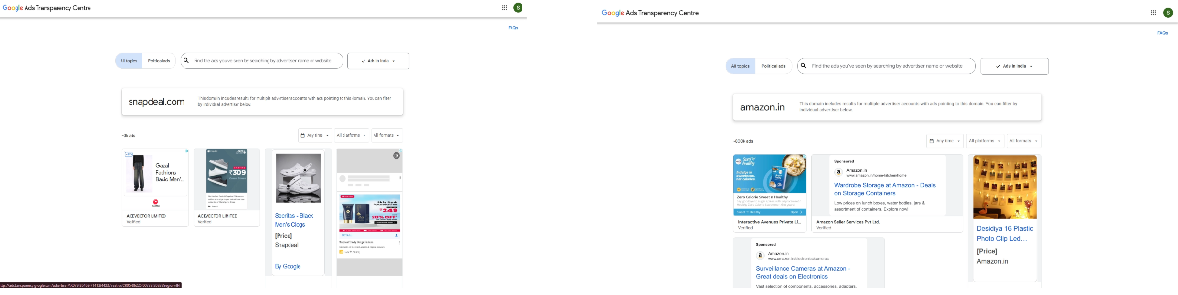
In this phase, most of the ecommerce ad agencies made mistakes. They forgot to compare their competitors’ ad performance. You need to focus on how they often post their content clearly, their attractive creations, and their ad performance. Yes, you can check your competitors’ ad performance details on the website. Those libraries are public (not open source), and you can’t see a competitor’s ROAS or spend data. Instead, you can get the ads’ performance status. This website is for ad transparency.
For Google Ads - https://adstransparency.google.com/
For Meta Ads - https://www.facebook.com/ads/library
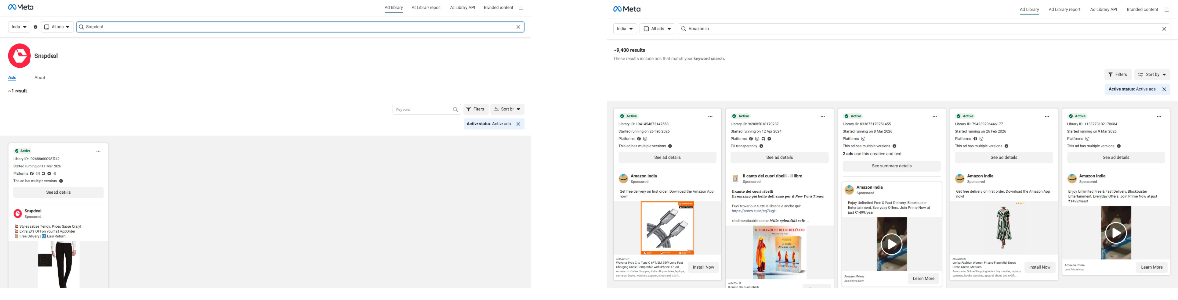
But here you have to compare manually. If you are running ads for the Snapdeal ecommerce website and running ads. Then Amazon, Flipkart, and Meesho are the top-level ecommerce websites in India. If Amazon has 100+ active ads Flipkart has 90 active ads then just imagine how long it takes to analyse all of those ads. This is the main reason some ecommerce ad agencies can’t analyse competitors completely.
Solution:
In Agentzee, you don’t need to analyse and compare your ads with your competitors. You just need to prepare a list of your competitors in your sector. Agentzee tells you and compares the analysis data of yours and your competitors. The Meta Ad Library offers an API for some ad data. Google’s Ads Transparency Center has no public API, so its data has to be reviewed on the website.
It gives a complete summary of the comparison within a few minutes, and no need for manual comparison. It reduces ecommerce ad agency time for optimizations.
4. Generating a report for all clients in Google Ads and Meta Ads
The team member in an ad agency is copying and pasting numbers from Google Ads into a spreadsheet. Then open Meta Ads Manager and again copy pasting more numbers for analysing both.
This manual process silently kills the productivity inside every ecommerce ad agency. The actual problem is not running campaigns or winning more clients. The real issue is the workflow between the dashboards.
If your agency manages both Meta and Google Ads for ecommerce brands for multiple clients, then reporting is actually a bottleneck. In this blog, you can get an idea to solve this problem and boost your performance.
Problem:
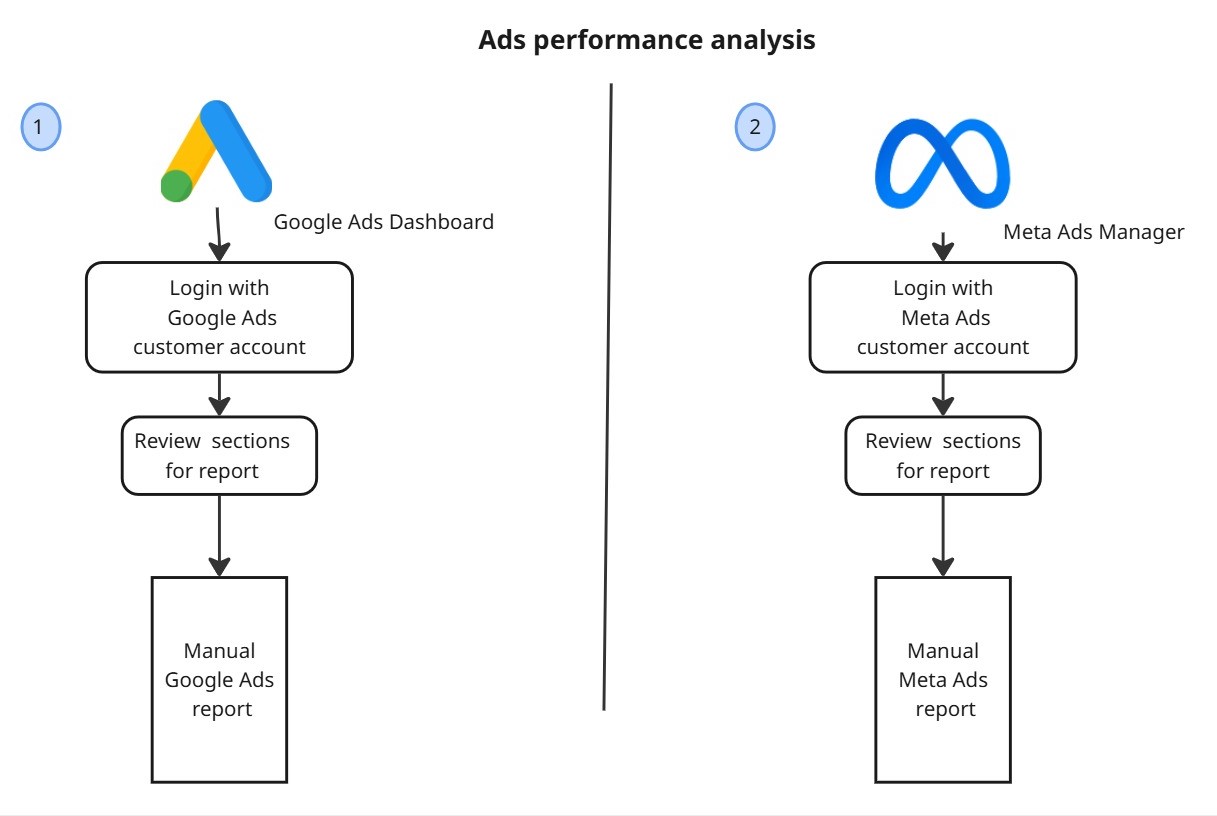
Your agency runs paid social on Meta Ads and paid search on Google Ads for the same ecommerce client. Both campaigns are live and performing well. If the client wants both report for their analysis, then someone on your team has to spend three hours manually cross-referencing two dashboards to prepare a report.
Multiply by 10 clients and now multiply it by the weekly reporting cycle.
You have to analyse Meta Ads and the Google Ads platforms to analyse the performance on both.
Solution:
Fix 1: Monitor the time you spend on manual work
Before the complete automation, you need to check the real spending time. Just track the manual process for a week to measure how many hours it takes to pull data for a client. Most ecommerce ad agency owners are genuinely shocked by the number of hours they spent. This automation
Improve the agency’s performance faster than before.
Note: This step is important to understand the time difference after the change.
Fix 2: Map your client platform.
List every client. For each one, mark which platforms are active - Meta, Google, or both. This gives you a clear picture of where the cross-platform complexity is highest. Clients running both simultaneously are your highest-friction accounts. They’re also where unified automation delivers the biggest return.
Note: Initially, agencies try to automate everything. But start with two or three high-complexity clients first.
Fix 3: Connect both into a single automation layer
Google Ads and Meta Ads, both platforms, provide an API for fetching data programmatically from the dashboard without even opening it. So you don’t need to open two platforms. On a single page, you can get data. Our product, Agentzee, provides multiple layers in a single place. Instead of walking through two platforms separately, Agentzee pulls performance data for both into one place automatically.
Before Agentzee: an analyst opens,
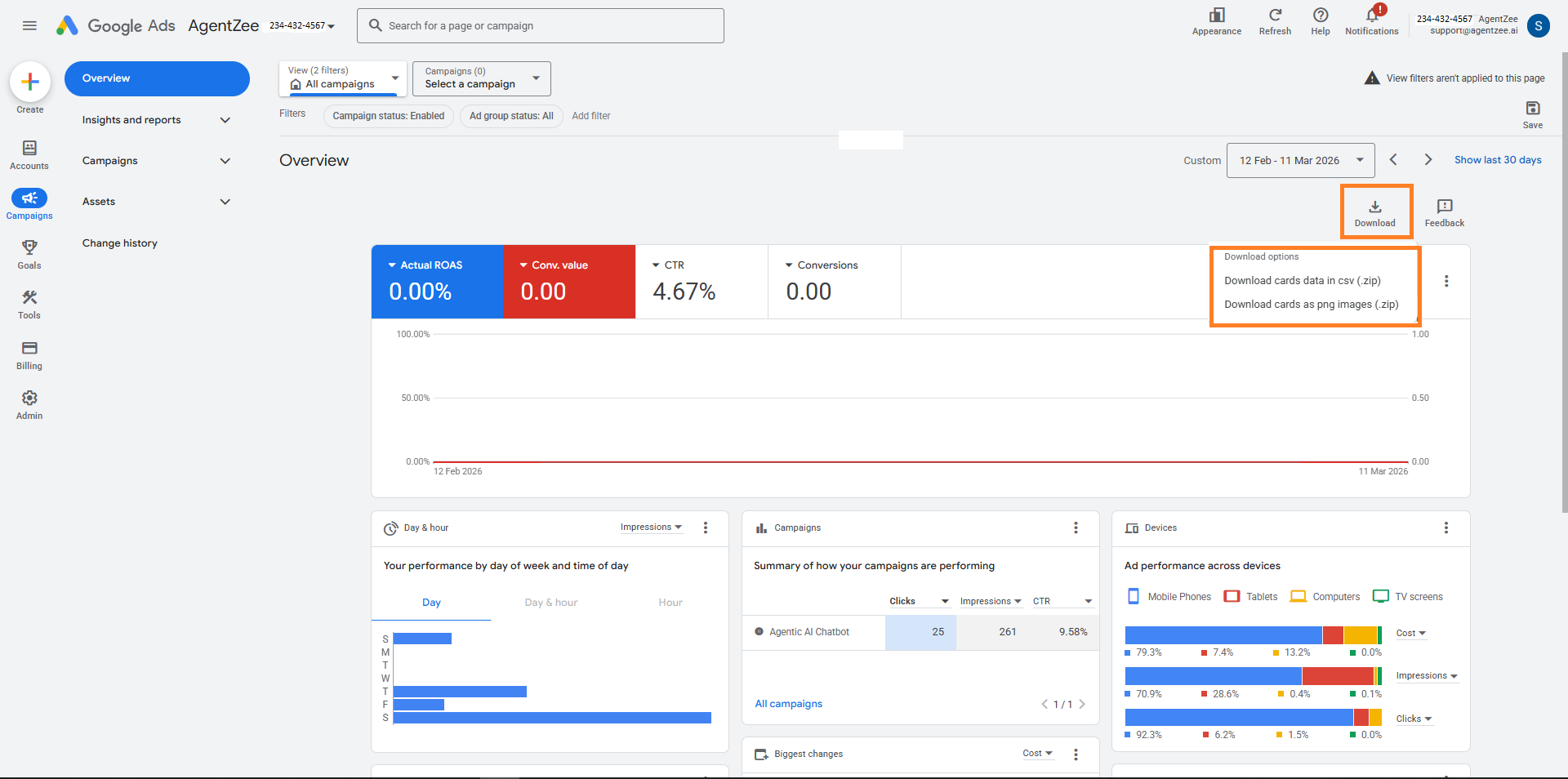
Google Ads dashboard → export data (export data by clicking the Download icon)
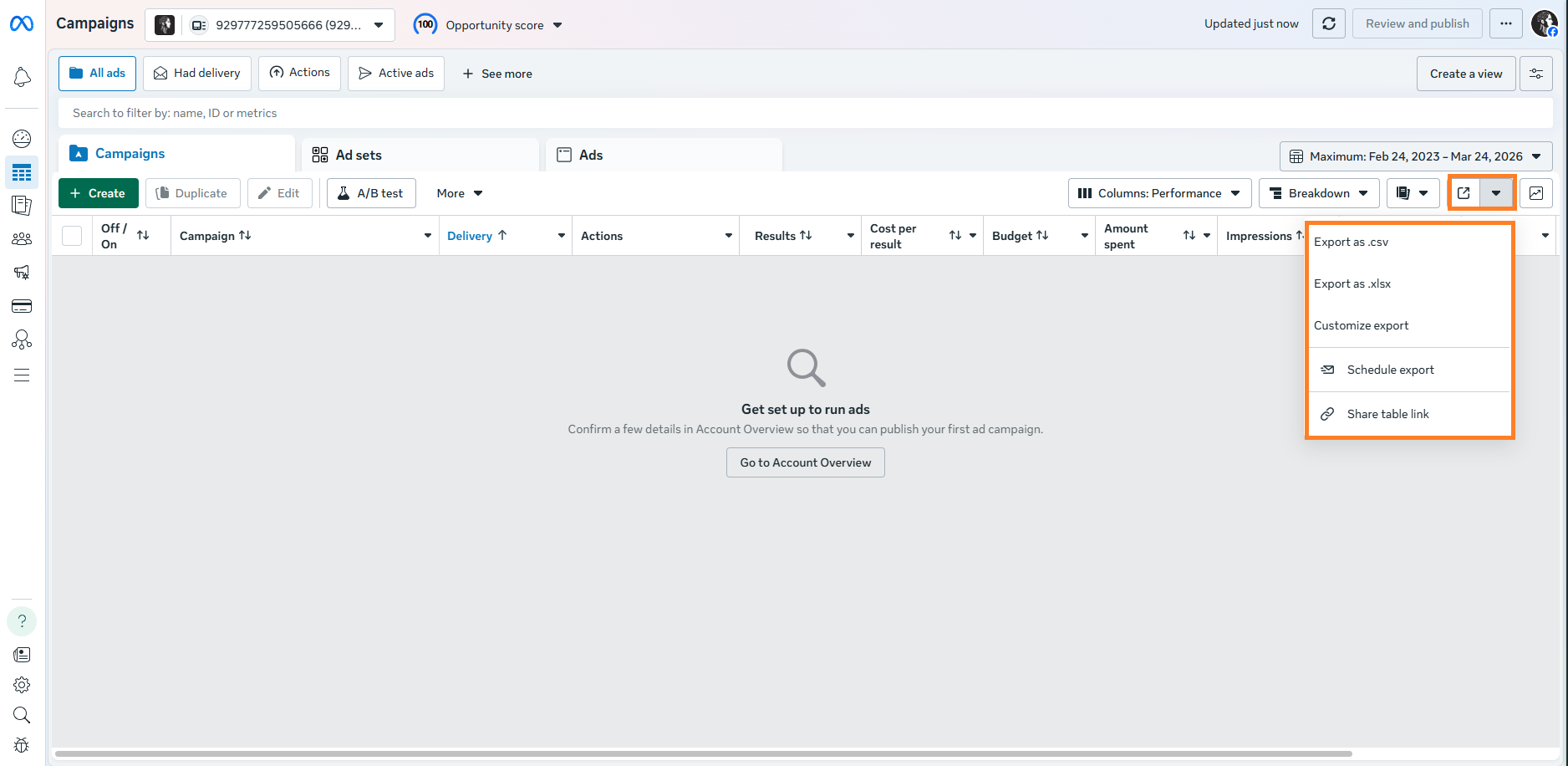
Meta Ads Manager → export data
Merge two spreadsheets → build report → 3 hours gone
After Agentzee: One platform → just one click → Google Ads and Meta Ads report
Fix 4: Standardise reports in one click
Every ecommerce ad agency thrives or falters based on client reporting. Using a single platform, you create a reporting template that accesses data from both Meta and Google at the same time. The report creates itself. You examine it. You forward it.
This alone saves many hours of work per client.
Fix 5: Reinvest the saved time into strategy
This is the step most of the ecommerce ad agencies forgot to plan. When your team ceases manual reporting, that time doesn’t vanish. It requires a new role. Utilise it for strategic client initiatives, inventive experimentation, audience analysis, and efforts that genuinely expand accounts. That’s the reason your clients engaged an ecommerce advertising agency.
The truth about automation that no one talks about
Will this automation solve every problem in ecommerce ad agency? No.
Some campaigns are too complex for templated reporting. We can’t fetch some data through the direct API. This problem is from the Meta and Google side, not the agencies.
But for the repeatable, weekly report, this automation works well. This automation isn’t an option. It is the only way to save some time.
Stop managing two dashboards. Start running on one platform.
If you feel it is difficult to switch your ecommerce ad agency to create automated reports for each client, then you should walk through our product Agentzee. But if you are still working manually, client by client, week by week, then you are wasting time.
Just connect your platform and generate a report by clicking a button. You can give your team time back.
Just one click, report created.
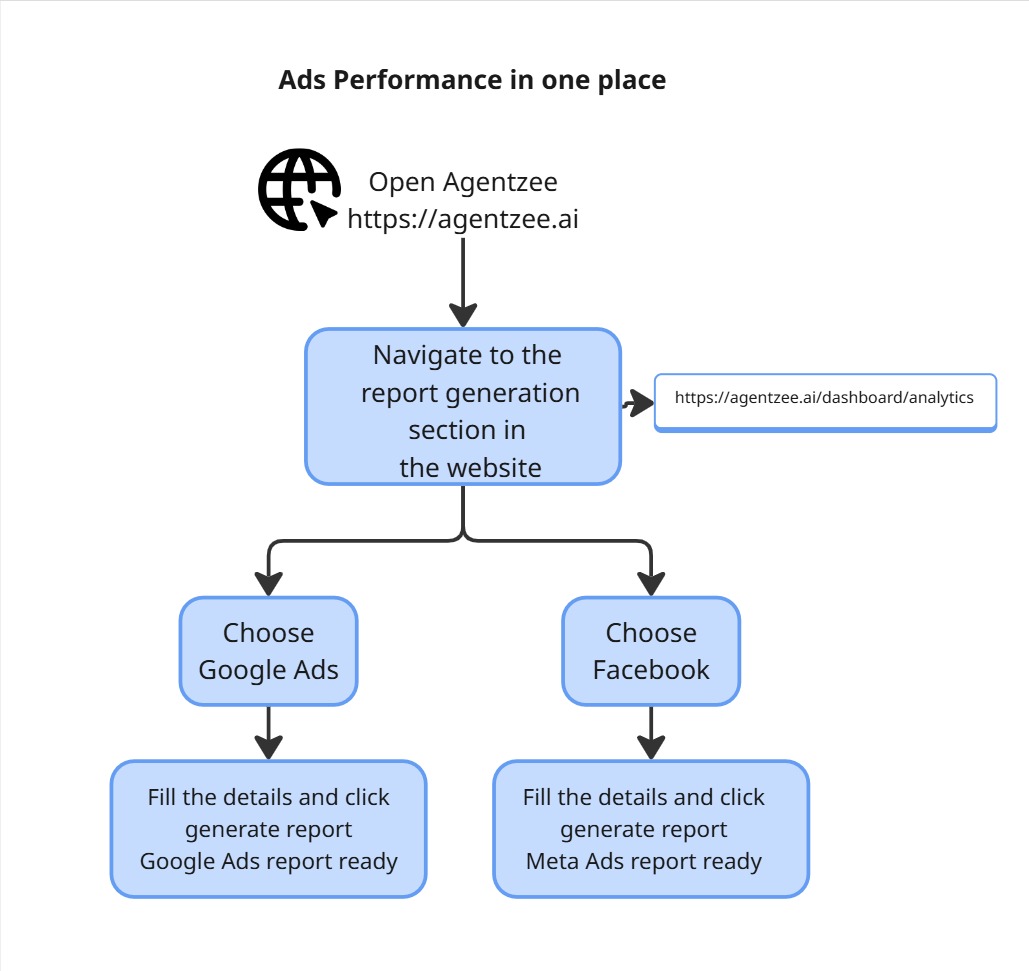
Instead of opening two different dashboards, just open our Agentzee, then go to the analytics page. Click Google Ads or Facebook. Then submit the necessary details and click the “Generate Report” button. Finally, the report is ready in just one click. Not only for ecommerce ad agencies, but you can also create reports for any other field. Save your time and satisfy your clients with the best performance.
Conclusion
This automation helps an ecommerce ad agency to speed up their work and save their time in manual report creation. They can utilise their saved time for other useful work. If manual work took 3 hours for a single client, then Agentzee took at most fifteen to twenty minutes.
The ecommerce ad agencies that are growing in 2026 aren’t hiring more analysts. They’re building smarter operational systems. They handle more clients, deliver faster insights, and spend their team’s time where it creates actual value in the strategy, the creative, and the account relationship.
Additionally, Agentzee helps you to reduce your setup time. You don’t need to code anything. Just connect your platform with us, and then you can do all the work with just one click.
To get more information about the analytics agent go through our analytics agent in Agentzee.