
Ravi runs three construction sites. One Tuesday morning in March, his concrete team arrived at Site B, helmets on, mixer ready to go, waiting to pour, except that the delivery had been moved to the night before. Someone communicated it. Somewhere. In one of the fourteen WhatsApp groups. No one knows which one.
The crew stood idle for four hours and got their concrete the next day. Ravi lost ₹80,000 that day.
Not to a flood. Not due to a worker issue. But because of an overlooked WhatsApp message.
This is not a tale of inept employees; it is about coordination infrastructure that was never designed for growth, and why an AI chatbot on WhatsApp for building contractors has been silently becoming the most sensible solution within this sector.
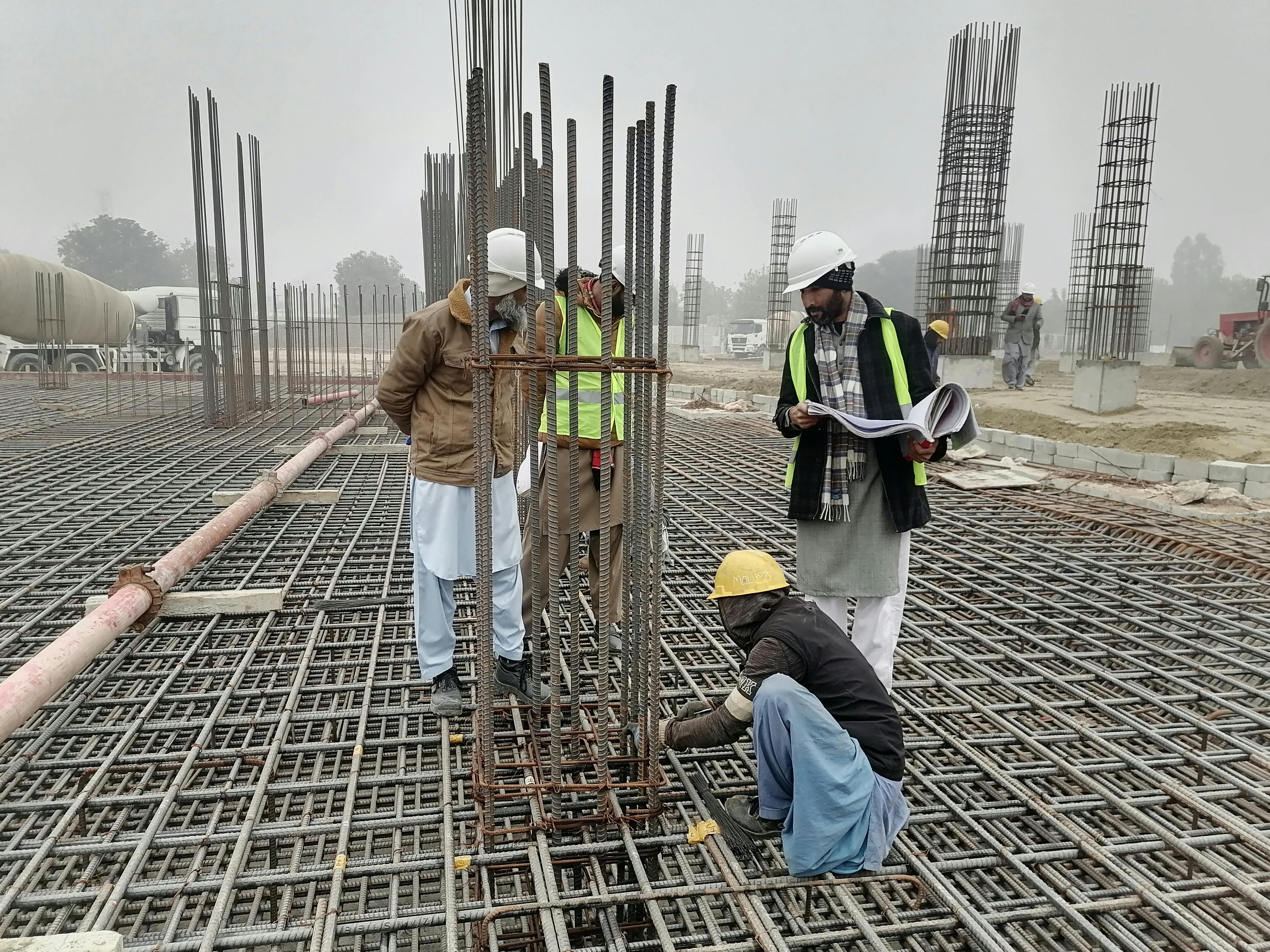
How communication noise impacts construction site efficiency
There are 8 to 15 WhatsApp groups that most site managers are in. Contractors. Engineers. Buying. Officers in charge of safety. The customer. The cousin of the client who “just wants updates.”
It stops being coordination and becomes a part-time job just reading messages.
And here’s the painful irony: the more people you add to a group “to keep everyone in the loop,” the harder it is to find anything. Forty-seven messages about lunch times and rain forecasts bury a very important material delay. The damage is done by the time someone sees it.
The issue isn’t a lack of communication. People are talking all the time, across every channel, but without any structure.
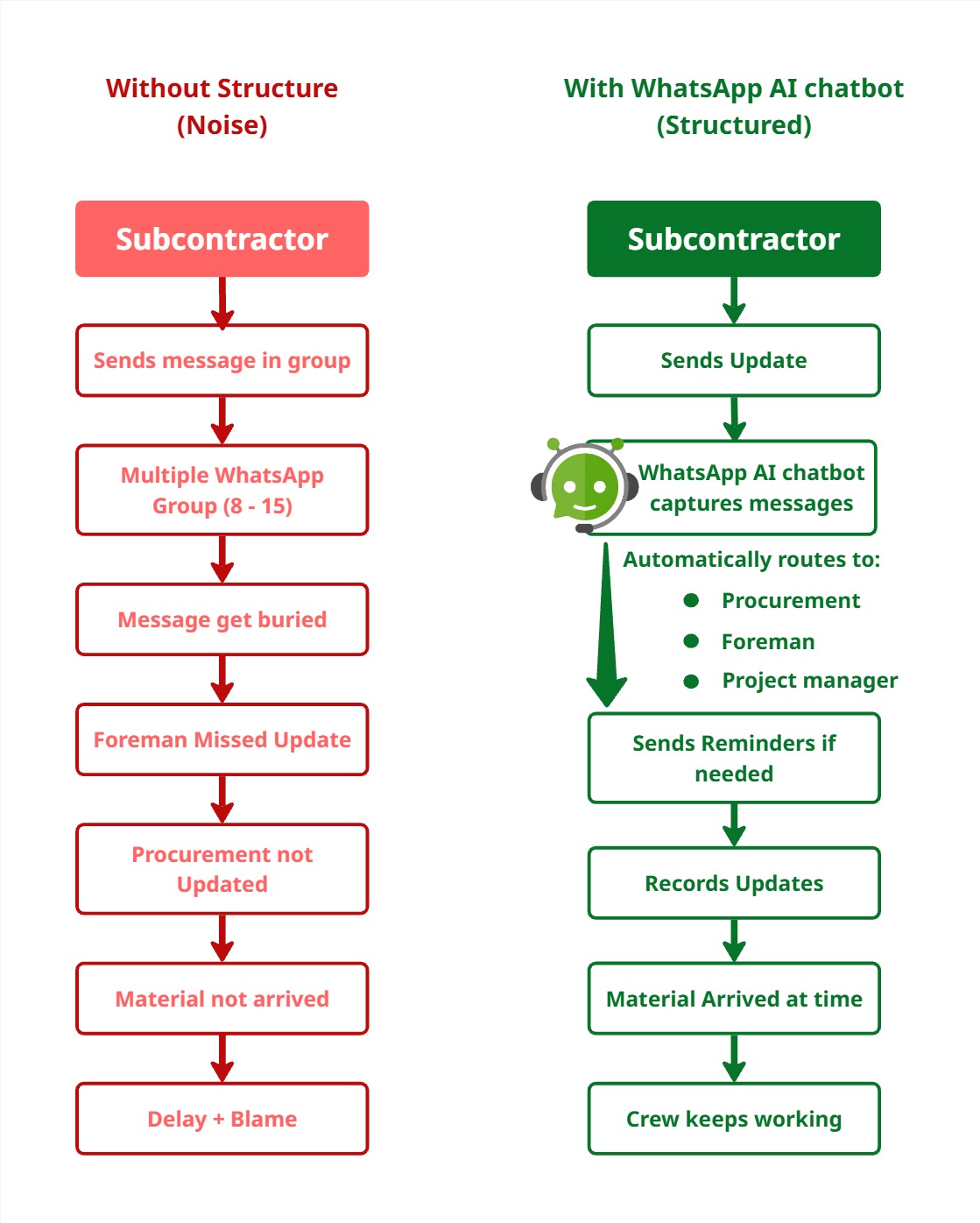
Old way: A subcontractor sent a message to the foreman. The foreman forgot to pass it on to procurement. Procurement did not order the material needed. The crew was left waiting. Everyone started pointing fingers at one another.
New way: A WhatsApp AI chatbot inside your construction company works as a top coordination layer: it catches updates and sends them where they should go, nudges with automated reminders, and records all that happens without anyone controlling any thread.
What a WhatsApp AI chatbot for a construction company can do
Let us be clear, because an “AI chatbot” may refer to a variety of things, from something that is truly helpful to a highly inflated FAQ page with a bunch of tech buzzwords.
For construction companies, the use cases that really matter are these:
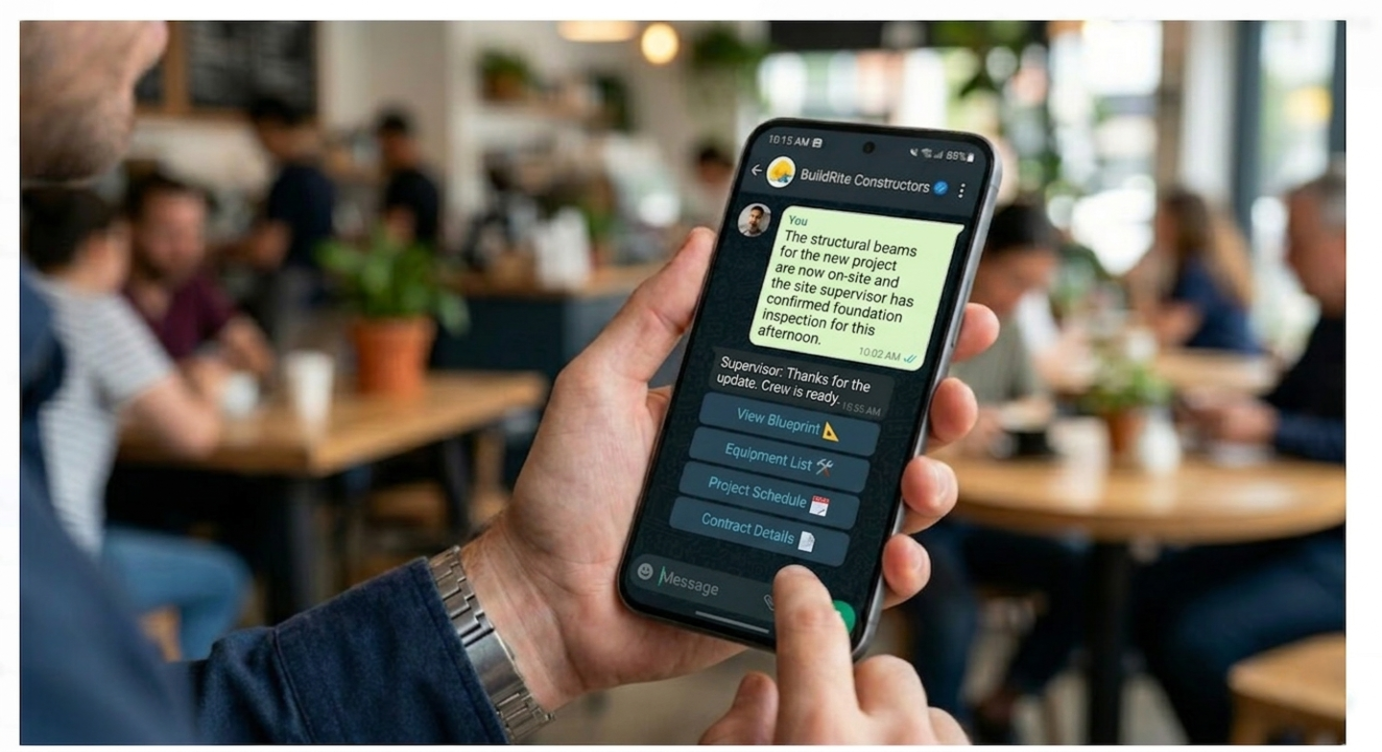
Broadcasting updates from the site. A foreman can send either a voice note or a short text message. The chatbot will then transcribe it, put it into proper structure as an update, and send it to all concerned parties - engineers, procurement, project owners - without requiring anyone to rewrite or forward anything. What used to take three calls now takes one message.
Tracking materials and deliveries. The chatbot keeps track of expected delivery times and sends notifications when deliveries are about to happen as well as flags delays in advance. No more “did the steel arrive?” calls at 7 PM.
Daily progress report. Workers send simple WhatsApp messages for task completion. The chatbot compiles them in a structured way and automatically sends them to the project manager. Thirty minutes of manual calls were reduced to two minutes of texting.
Alerts regarding safety and compliance. When an inspection is due or there is a weather warning, the chatbot instantly pushes relevant alerts to site staff. Right message. Right people. Right time.
A WhatsApp AI chatbot is not a substitute for your project management software, but rather acts like the human-friendly interface that gets used by workers, since everybody uses WhatsApp; no one will be opening up another new application just because procurement requested it.
The business numbers
Within 60 to 90 days, contractors who use a WhatsApp AI chatbot in their construction work usually see results that can be measured:
40 to 60 percent less time spent waiting for coordination
Reporting time cut in half, from calls and handwritten logs to automated summaries
There are fewer firefighting escalations because updates get to the people who make decisions before small problems become big ones.
Fewer calls from clients. Clients don’t have to call and ask “how’s the project going?” anymore because of automated progress updates.
The math for ROI isn’t hard. Four hours of concrete crew time that isn’t being used, like Ravi’s Tuesday, costs more than most chatbot deployments for a whole year. It’s simple maths.
Does it suit my crew?
That’s a fair objection. And it is the most common one.
Construction crews are not early adopters. Foremen have been doing this work for fifteen years without a chatbot, and they will tell you so, probably in person, maybe while gesturing at something. Getting them to sign into yet another platform, learn another interface, or follow another process is a battle no one wants to fight on a busy site.
But here’s the thing: no one is asking them to.
A WhatsApp AI chatbot operates within WhatsApp in the same manner that your team already does when they share blurry images of rebar or discuss lunch options. There is no new login, no new interface, and no training session. The foreman sends a message as he normally would. After that, the chatbot takes care of everything that follows; that is not a small detail but rather all of the adoption argument.
The tools that do not work on construction sites are those that require workers to alter their behaviour; a WhatsApp AI chatbot for construction companies works precisely because it does not require any change whatsoever. It catches people exactly where they are already at and builds a structure around their existing habits.
The real adoption challenge is not with the workers but rather with the project manager, who has to make sure it gets set up correctly in the first place.
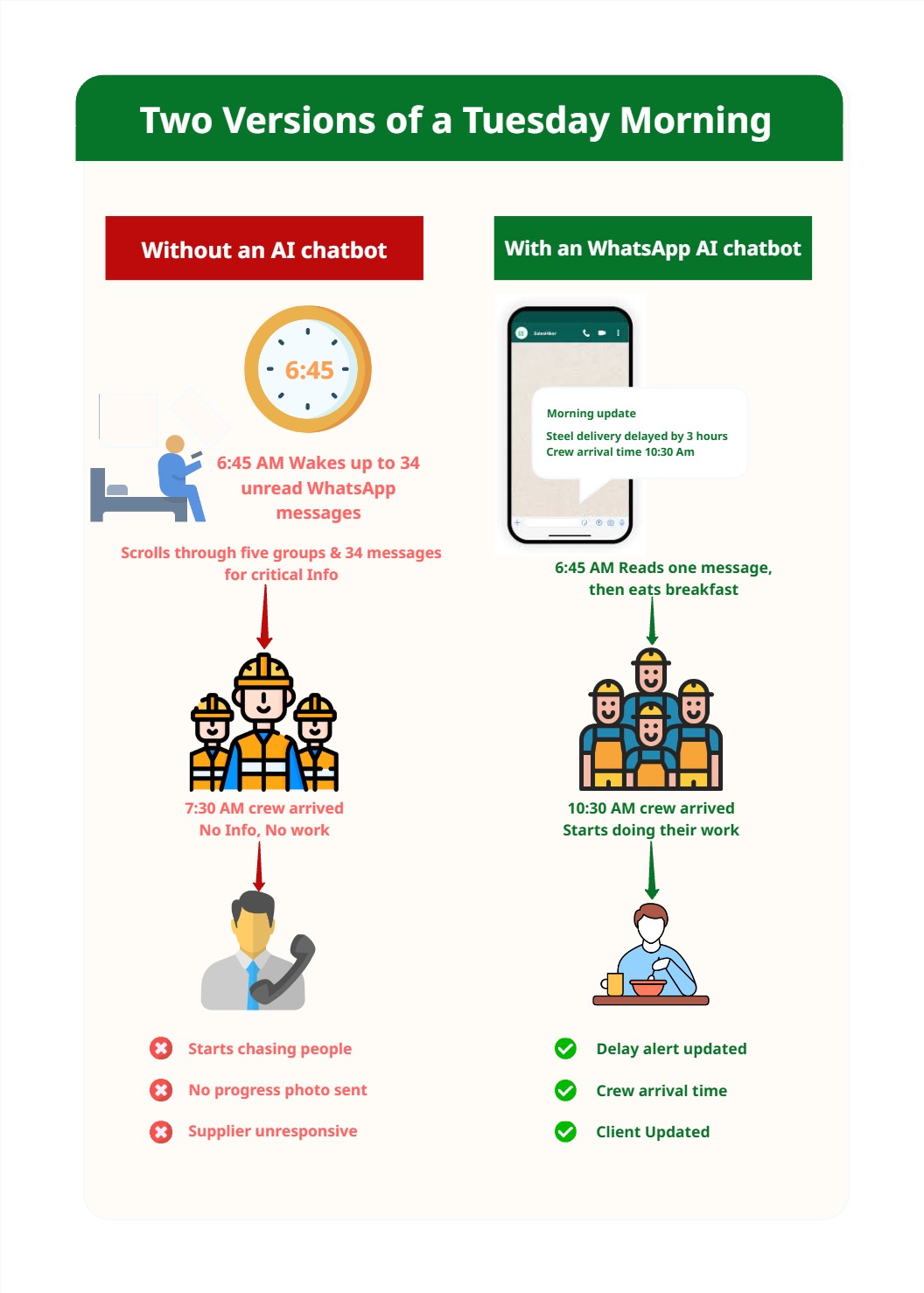
Two versions of a Tuesday morning
Here’s the same site. Same crew. Same project. Two different realities.
Without a WhatsApp AI chatbot for construction companies:
6:45 a.m. The foreman wakes up to find 34 unread WhatsApp messages in five groups. He begins to scroll. It’s 7:20 when he finds the one about the steel delivery being late. He calls the person in charge of buying things. No response. He sends texts. The crew gets there at 7:30. No work to do. They sit down. Someone asks for chai. By 9 AM, the project manager is chasing progress photos, while the foreman is still caught up in a call with the supplier.
It’s already broken, and the day hasn’t even started
With a WhatsApp AI chatbot for construction companies:
At 6:45 AM, the foreman gets one automated summary on WhatsApp. Three hours late for steel delivery. Crew arrival is recommended at 10:30. Procurement has already been told. Sent an update to the client. Attached are two pictures from yesterday’s pour for the progress log.
He stops texting and eats breakfast.
That isn’t a tech demo. That’s just a Tuesday that doesn’t cost anyone anything.
What makes those two mornings different isn’t talent, hard work, or the number of people. It’s whether information moves by itself or needs a person to push it.
A WhatsApp AI chatbot in a construction company takes the human out of the middle of every routine update. Stop being message-forwarding machines, foremen. Stop chasing daily logs, project managers. When customers already know what’s happening, the calls stop, and everyone gets back to doing their actual job.
That’s the effect that no one talks about in the brochures. It’s not just that you get fewer messages, but that you miss. It’s how your team uses the mental space they get back.
The honest admission
Can a WhatsApp AI chatbot fix all the problems with coordinating work on a construction site? No.
A chatbot won’t help if your subcontractors don’t have any kind of structured process in place. If your project manager is the problem, sending messages around them won’t help. This works best when your team is willing to stick to a regular input routine, even if it’s a simple one. The chatbot takes care of the routing, formatting, and follow up. The people still need to send the first message.
It’s a limit worth being upfront about, and it’s how most tools work.
Conclusion
Ravi’s ₹80,000 on Tuesday wasn’t an exception. It’s happening every week across construction sites, just spread across different teams, projects, and timelines.
The solution isn’t adding more WhatsApp groups. It’s fixing how information moves inside the one app everyone already uses.
A WhatsApp AI chatbot doesn’t need a massive rollout or a digital overhaul. It needs clear use cases, a reliable system, and a team ready to text instead of chase calls.
If this feels familiar, Agentzee is worth fifteen minutes. It’s built for exactly this kind of chaos, and costs far less than a few idle hours on site.
Please check out our product